


Real estate companies handle vast amounts of diverse data while conducting complex analytics for critical business decisions. Traditional on-premise systems create bottlenecks when processing this information, often failing to maintain adequate performance and accessibility. To fill this gap, real estate service providers are now moving away from local servers to adopting cloud integration for their daily operations.
What are the benefits of cloud-based property management systems?
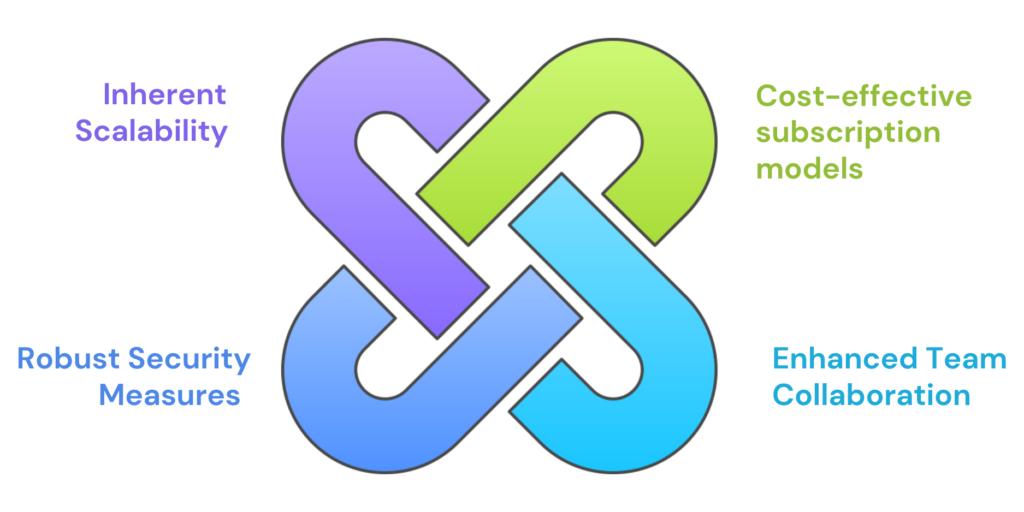
Cloud-based property management systems provide several key advantages over traditional solutions, such as:
Cost-effective subscription models: Eliminates large upfront expenses, replacing significant capital investments with predictable monthly or annual fees.
Enhanced team collaboration: Creates centralized workspaces where real estate professionals can collaborate in real-time, regardless of their physical location.
Robust security measures: Protects sensitive property and client information with advanced encryption and multi-factor authentication.
Inherent scalability: Allows companies to adjust their computational resources based on actual requirements. Organizations pay only for the processing power they use, scaling up or down as business needs change.
How Cloud Integration Improves Real Estate Team Operations?
Cloud integration creates significant operational improvements for real estate teams. Real-time communication tools eliminate lengthy email chains, enabling teams to chat, share files, and conduct virtual meetings instantly. This immediate interaction keeps everyone aligned while reducing misunderstandings and accelerating decision-making processes.
Centralized document management changes how teams handle property listings, contracts, and client information. Cloud storage solutions provide instant access to documents from any internet-connected device, replacing time-consuming searches through filing cabinets or scattered digital folders. Teams save valuable time while reducing the risk of misplacing crucial paperwork.
Cloud platforms create unified workspaces for real estate teams. Companies utilizing cloud collaboration tools report productivity increases of up to 25%. These platforms also facilitate communication with external partners like mortgage brokers, inspectors, and attorneys, speeding up closing processes significantly.
Automated workflows in cloud-based property management systems handle repetitive tasks such as rent collection, lease renewals, and maintenance requests. This automation reduces administrative workload, minimizes errors, and ensures timely completion of essential activities.
The mobility aspect proves essential for real estate professionals who work frequently outside traditional office settings. Cloud-based systems provide access to data and applications from any location—ideal for conducting property viewings, client meetings, and site visits without losing operational momentum.
Why Cloud-Based Property Management Systems Are Gaining Popularity?
The market has delivered a clear verdict on cloud-based property management systems, with cloud solutions capturing 61.1% of revenue share in 2023. This significant market dominance reflects practical advantages that solve everyday challenges property managers face.
Remote accessibility drives much of this popularity surge. Property managers can access tenant information, unit status, financial reports, and maintenance requests instantly from any location with internet connectivity. Staff can perform critical tasks outside traditional office environments, providing flexibility that on-premise systems cannot match.
Cloud systems automatically handle software updates, ensuring users always have access to the latest features without disrupting daily operations. This eliminates the need for manual installations, system downtime, or IT staff coordination that traditional systems require.
The Software-as-a-Service model continues gaining momentum through its pay-as-you-go structure. Real estate businesses can scale their software according to evolving requirements without expensive hardware upgrades. Companies experience predictable operational expenses rather than large capital investments in servers and infrastructure.
Property managers particularly value the elimination of IT maintenance responsibilities. Cloud providers implement encryption, automatic backups, and multi-layer authentication to protect sensitive business data. This professional-grade security often exceeds what individual companies can implement with on-premise solutions.
The combination of accessibility, automatic maintenance, and predictable costs explains why cloud-based property management systems have achieved such widespread adoption across the real estate industry.
Crafting Future-ready Real Estate with Cloud Software
Real estate companies are positioning themselves for emerging technological trends through advanced cloud platforms. Artificial intelligence applications are reshaping how firms approach market analysis, property valuation, and client service delivery. Predictive analytics enable companies to identify market trends before competitors, optimize property values based on comprehensive data analysis, and deliver enhanced client experiences.
AI-powered property management capabilities are becoming standard features in cloud platforms. These systems handle property valuation algorithms, predictive maintenance scheduling, and personalized marketing campaigns with minimal human intervention. The global predictive maintenance market is projected to reach USD 47.8 billion by 2029.
Cloud-based PropTech solutions prioritize mobile-first architecture, placing powerful management tools directly into professionals’ hands through smartphones and tablets. Digital document signing, real-time notification systems, and integrated payment processing become seamlessly accessible through mobile interfaces.
IoT integration creates intelligent property ecosystems. Cloud platforms now control energy-efficient building systems, manage remote access to locks and thermostats, and monitor lighting systems automatically. This connectivity produces “smart” investment properties that attract modern tenants seeking advanced amenities.
Future readiness depends on adaptable technology infrastructure. Cloud platforms automatically incorporate new features as they become available, while pay-as-you-go pricing structures allow companies to expand capabilities without major capital expenditures. Automatic platform updates ensure compliance with changing legal requirements across multiple jurisdictions, particularly benefiting firms operating in different markets.
Why Cloud Integration Is No Longer Optional for Real Estate Success
The real estate industry faces constant change. Companies that adopt cloud integration position themselves for greater efficiency, reduced costs, and improved client experiences.
Cloud integration marks a decisive shift in real estate operations across today’s digital landscape. Companies moving from traditional systems to cloud-based solutions gain advantages that forward-thinking firms cannot afford to ignore. Real estate professionals experience substantial cost savings through subscription models while benefiting from enhanced team collaboration across multiple locations.
Security concerns, once a primary obstacle for cloud adoption, have been addressed through advanced encryption and multi-factor authentication protocols. These measures often provide superior protection compared to many previous on-premise solutions. Teams value the ability to access critical information from anywhere, making property viewings and client meetings more productive and data-driven.
Cloud platforms are becoming more sophisticated with AI capabilities that reshape property valuation and predictive maintenance. The popularity of cloud-based property management systems, like Aekyam, continues to grow steadily, evidenced by their dominant market share. Aekyam’s mobile-first design puts powerful management tools directly into users’ hands, while IoT integration creates smarter properties that appeal to modern tenants.
Aekyam accelerates this transition by connecting your entire real estate tech stack—CRM, ERP, marketing, and property management—into one seamlessly integrated cloud ecosystem. From automation to analytics, Aekyam ensures every tool works together so your team can focus on growth—not glitches.
Share
Read Similar Blogs