


Supply chain delays cost money. Data breaches damage reputations. Manual errors slow operations.
These aren’t just inconveniences. They’re serious threats to your bottom line. Traditional EDI (Electronic Data Interchange) solved some of these problems decades ago. But in today’s fast-paced digital landscape, EDI alone isn’t enough.
Here’s the reality: businesses that combine EDI with iPaaS (Integration Platform as a Service) see measurable improvements in speed, accuracy, and cost efficiency. This guide shows you exactly how that combination works and why it matters for your operations.
What Is EDI and Why Do Businesses Still Use It?
EDI is a standardized method for exchanging business documents electronically between trading partners. Instead of printing, mailing, and manually processing purchase orders or invoices, EDI sends them as structured electronic files.
In simple terms, it is a universal language for business documents.
How EDI Works
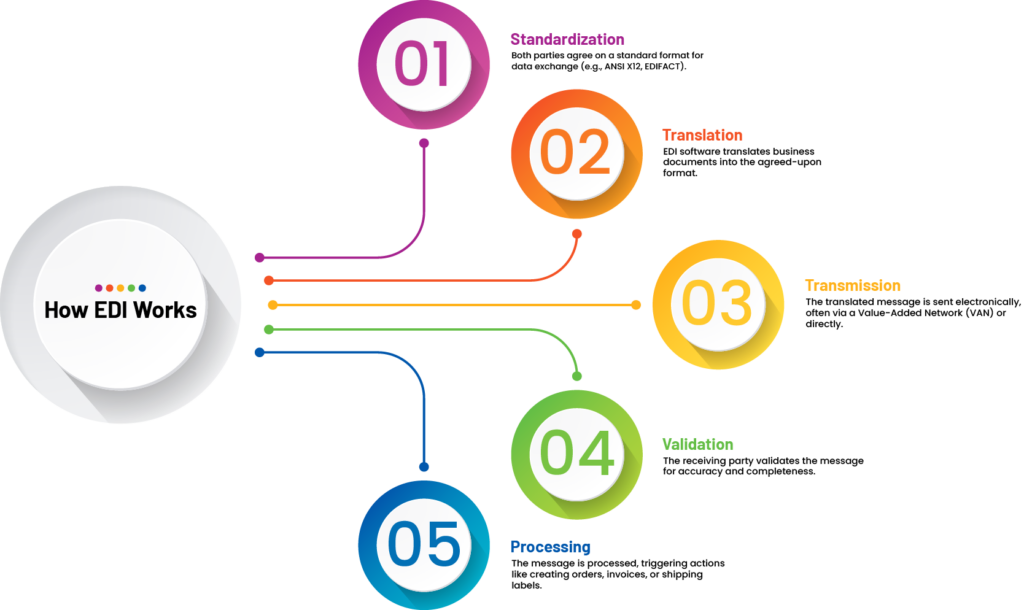
The process is straightforward. Your system creates a business document, for example, a purchase order. EDI software translates it into a standardized format. That formatted document gets transmitted to your trading partner’s system. Their EDI software converts it back into a format their systems understand.
No paper. No manual data entry. No phone calls to confirm details.
The Core Benefits of EDI
EDI has remained popular for good reasons:
- Speed: Documents transfer in minutes instead of days
- Accuracy: Automated processes eliminate manual typing errors
- Cost savings: Less paper, postage, and administrative time
- Compliance: Built-in validation ensures documents meet industry standards
- Global reach: Standardized formats work across borders and industries
Why Hasn’t Newer Technology Replaced EDI?
Simple answer: EDI works, and it’s deeply embedded in supply chain operations.
Major retailers and manufacturers require EDI from their suppliers. Switching away would mean rebuilding relationships and retraining entire ecosystems. Plus, for straightforward document exchange between established partners, EDI does the job well.
But that doesn’t mean EDI is perfect.
The Limitations of Standalone EDI
EDI shines at what it was designed to do: structured document exchange. But modern businesses need more than that.
Complexity in Implementation
Setting up EDI isn’t simple. You need to map data fields between your systems and EDI formats. Each trading partner might use standards slightly differently. Optional fields, custom requirements, and industry-specific variations add layers of complexity.
Smaller companies often struggle with the technical expertise required. The learning curve is steep, and finding skilled EDI professionals gets harder every year.
Scalability Challenges for Growing Businesses
As your business grows, your integration needs multiply. More trading partners mean more connections to maintain. More data volume can slow down batch processing.
Traditional EDI systems weren’t built for the real-time, high-volume demands of modern e-commerce and supply chain operations. Scaling up often requires significant investment in hardware and specialized staff.
Data Quality and Validation Issues
EDI validates document structure, but it doesn’t solve underlying data quality problems. If your product codes are inconsistent or your pricing tables have errors, EDI will transmit those mistakes faithfully.
You also face challenges when EDI data needs to flow to other systems. Your CRM, inventory management, or analytics platforms might need that same information. EDI alone doesn’t handle those cross-system workflows.
How iPaaS Solves EDI's Biggest Problems
This is where iPaaS changes the game.
An AI workflow orchestration platform connects applications, automates data flows, and manages integrations from a central hub. When you combine EDI with iPaaS, you get the reliability of standardized document exchange plus the flexibility of modern integration.
What iPaaS Brings to the Table
iPaaS platforms offer capabilities that traditional EDI lacks:
- Multi-system connectivity: Connect EDI to your ERP, CRM, e-commerce platform, and cloud applications
- Real-time processing: Move beyond batch jobs to instant data synchronization
- Data transformation: Automatically translate between different formats and standards
- Visual workflows: Build and modify integrations without extensive coding
- Centralized monitoring: Track all your integrations from one dashboard
Real-Time Data Sync vs. Batch Processing
Traditional EDI processes documents in batches. You might send purchase orders once an hour or update inventory overnight. That works for some scenarios, but modern businesses need faster responses.
iPaaS enables real-time data flows. When a customer places an order, inventory updates immediately. When a supplier ships a product, your system knows instantly. This speed creates better customer experiences and reduces the risk of overselling or stockouts.
Can iPaaS Replace EDI Entirely?
Not exactly, and here’s why: EDI provides the standardized formats that trading partners expect. iPaaS provides the connectivity and automation layer.
Think of EDI as the language and iPaaS as the communication infrastructure. You need both. iPaaS handles the translation, routing, and integration work that makes EDI data useful across your entire tech stack.
Some platforms marketed as EDI replacements actually embed EDI capabilities within their iPaaS architecture. That’s the sweet spot: standardized document exchange plus intelligent integration.
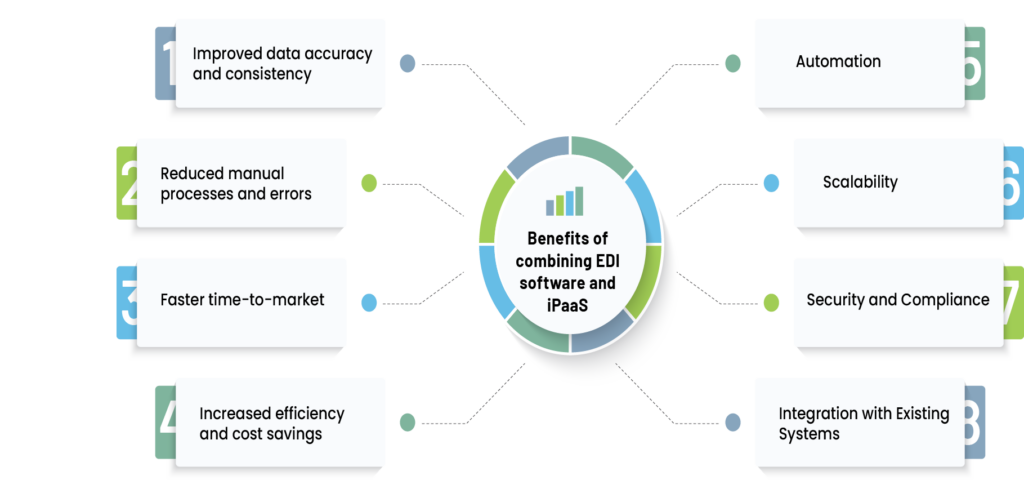
5 Key Benefits of Combining EDI and iPaaS
When you bring these technologies together, specific advantages emerge.
1. Enhanced Connectivity Across Systems
EDI connects you to trading partners. iPaaS connects EDI to everything else.
Your purchase orders flow from EDI into your ERP system automatically. Inventory updates sync to your e-commerce platform in real time. Shipping notifications trigger customer emails and update your order management system.
This connectivity eliminates data silos. Everyone works from the same information, whether they’re in purchasing, warehouse operations, or customer service.
2. Improved Data Management and Quality
iPaaS platforms include data validation and cleansing tools. Before EDI data enters your core systems, it can be checked for accuracy, formatted consistently, and enriched with additional context.
You can set up rules that flag unusual values, standardize product codes, or fill in missing information. This improves data quality across your entire organization, not just in EDI transactions.
3. Automated Workflows That Reduce Errors
Manual processes introduce errors. Someone misreads a number. A file gets saved in the wrong location. An email notification gets missed.
iPaaS automation eliminates these touchpoints. Purchase orders received via EDI automatically create records in your ERP. Invoice data flows to your accounting software without manual entry. Exceptions trigger alerts to the right team members.
The result: fewer mistakes, faster processing, and less time spent on routine tasks.
4. Scalability Without Infrastructure Headaches
Cloud-based iPaaS solutions grow with your business. Adding new trading partners doesn’t require buying new servers or hiring more IT staff.
Pre-built integration adapters make connecting to common systems faster. When you need custom integrations, low-code tools let business users build them without deep technical expertise.
This scalability matters whether you’re a small company planning for growth or an enterprise managing hundreds of connections.
5. Lower Costs Through Efficiency
Yes, iPaaS represents an investment. But the operational savings add up quickly.
Less manual data entry means lower labor costs. Fewer errors mean less time spent on corrections and customer service issues. Faster processing means better cash flow and fewer delays.
Many organizations see ROI within months, especially if they’re currently managing multiple point-to-point integrations or dealing with frequent EDI-related issues.
How to Choose the Right iPaaS with EDI Capabilities
Not all iPaaS platforms handle EDI equally well. Here’s what to look for.
Scalability: Planning for Growth
Your integration needs will change. Can the platform handle increasing transaction volumes? Does pricing scale reasonably as you add connections?
Look for solutions that support both small-scale pilots and enterprise-wide deployments. You want room to grow without hitting technical or financial walls.
Security and Compliance Requirements
EDI transactions involve sensitive business data. Purchase orders, invoices, and shipping details all contain information you need to protect.
Verify that your iPaaS provider offers:
- Encryption for data in transit and at rest
- Role-based access controls
- Compliance with relevant standards (HIPAA, GDPR, PCI DSS)
- Regular security audits and certifications
Data breaches cost more than money. They damage trust with partners and customers.
Integration with Your Existing Tech Stack
The best iPaaS platform connects easily to the systems you already use. Check for pre-built connectors to your ERP, CRM, and other core applications.
If you’re running legacy systems, make sure the platform can bridge old and new technology. You shouldn’t have to replace your entire infrastructure just to improve EDI integration.
Best Practices for EDI and iPaaS Integration
Getting the technology right is half the battle. How you implement it matters just as much.
Start with Clean Data
Garbage in, garbage out. Before integrating systems, audit your existing data.
Fix product code inconsistencies. Standardize customer names and addresses. Validate pricing tables. This cleanup work pays dividends once automation kicks in.
Good data governance practices keep things clean going forward. Establish clear ownership for data quality in each system.
Set Up Robust Error Handling
Integrations will occasionally fail. Files get corrupted. APIs go down. Partners send unexpected data formats.
Your iPaaS should log all errors with enough detail to diagnose problems quickly. Set up alerts that notify the right people when issues occur. Configure automatic retries for transient failures.
The goal isn’t zero errors—that’s unrealistic. The goal is catching and resolving issues before they impact operations.
Monitor Performance with the Right Metrics
Track the metrics that matter for your enterprise automation use cases:
- Transaction volume and processing time
- Error rates by integration and partner
- Data quality scores (completeness, accuracy)
- Time to resolve issues
- Cost per transaction
Regular monitoring helps you spot problems early and justify continued investment in integration infrastructure.
What's Next: Future Trends in EDI and iPaaS
The integration landscape keeps evolving. Here’s what’s emerging.
AI-Powered Automation
Artificial intelligence is making integrations smarter. AI can predict data mapping requirements, suggest workflow optimizations, and even handle certain error resolution tasks automatically.
Natural language processing makes building integrations more accessible to non-technical users. Instead of writing code, you describe what you want in plain language.
Blockchain for Enhanced Security
Blockchain technology offers enhanced transparency and security for B2B transactions. Smart contracts can automate certain aspects of trading partner agreements.
While still emerging, blockchain integration with EDI and iPaaS could provide tamper-proof audit trails and automated compliance verification.
Growing Adoption in IoT Ecosystems
Internet of Things devices generate massive data streams. Combining this IoT data with traditional EDI creates new possibilities for supply chain visibility.
Imagine real-time tracking data from shipments automatically updating EDI advance shipping notices. Or IoT sensors in warehouses triggering automated inventory adjustments that flow through EDI to trading partners.
iPaaS platforms that handle both traditional integrations and IoT data streams position businesses for this connected future.
Making the Right Choice for Your Business
Integration isn’t just about connecting systems. It’s about building operations that scale efficiently, reduce errors, and create better experiences for customers and partners.
EDI provides the standardized document exchange that B2B commerce requires. iPaaS adds the automation, connectivity, and intelligence that modern businesses demand. Together, they deliver results that neither can achieve alone.
Platforms like Aekyam address these integration challenges by combining iPaaS capabilities with support for EDI workflows. The result: you get seamless connectivity across your entire tech stack without the complexity of managing multiple point solutions.
If you’re dealing with EDI complexity or struggling to connect systems efficiently, it’s worth exploring purpose-built integration platforms. The right solution should simplify your workflows, not add to the technical burden.
Your integration strategy affects speed, accuracy, and costs across your entire operation. Choose tools that grow with you and make complex integrations manageable.
Get in touch with our team to enhance your EDI operations.
Share
Read Similar Blogs