
Supply chain disruptions continue hitting businesses harder than ever, yet most organizations remain stuck with manual processes. Recent geopolitical tensions and trade pressures have exposed critical weaknesses in traditional supply chains. Organizations still using legacy systems face a stark reality: modernize by early 2025 or risk falling behind.
To avoid this, companies are implementing predictive orchestration and Supply Chain AI Integration to build resilience that manual processes simply cannot match.
Supply chain orchestration coordinates multiple systems, stakeholders, and workflows to function as a single unified network. Unlike basic automation that handles individual tasks, orchestration manages entire workflows across partners, suppliers, and internal teams simultaneously.
What this article will cover:
- What is AI orchestration and how it differs from basic automation
- Why AI in supply chains creates competitive advantages right now
- How to build your orchestration strategy from assessment to deployment
The question isn’t whether to adopt supply chain orchestration. Can you afford to wait while competitors pull ahead? Read on to know more.
Supply Chain Disruptions Exposed What Manual Systems Cannot Handle
Global Events Revealed Critical Infrastructure Gaps
The pandemic exposed supply chain problems that already existed. Companies relying on just-in-time models discovered they had built systems optimized for efficiency, not resilience. When factories shut down and shipping routes closed, those carefully constructed networks collapsed.
Geographic concentration created vulnerability. China’s lockdowns halted production for months, while Taiwan’s semiconductor dominance left automotive and electronics manufacturers scrambling. Majority of businesses now perceive supply chain risk as high or very high. The Suez Canal blockage and port congestion at Los Angeles and Rotterdam proved that single chokepoints could paralyze global trade.
Visibility gaps amplified every problem. Most organizations lacked real-time insight into their supply chains. When disruptions hit, decision-makers struggled to assess the scope of problems. Data sat in silos across different systems, and by the time teams gathered information, conditions had already changed.
Following years of optimization, many organizations continue experiencing higher-than-expected supply chain losses despite enhanced risk management efforts. The infrastructure wasn’t built for volatility.
From Linear Operations to Unified Ecosystems
Linear supply chains operated in silos. Each participant managed their own segment without coordinating with others. Planning happened in monthly cycles, execution followed rigid schedules, and collaboration was minimal.
This is why there’s a need for an orchestrated ecosystem.
Supply chain orchestration synchronizes systems, partners, and workflows in real time so the entire network functions as a unified ecosystem. Planning and execution happen simultaneously and bidirectionally. When execution hits a snag, plans update automatically.
According to Gartner, companies are now investing in deeper, more collaborative supplier relationships to improve resilience and agility. Organizations are moving from manual processes to orchestrated ecosystems. In this scenario AI handles anticipation, prediction, and automated responses.
Early Adopters Build Competitive Advantages
Leaders aren’t waiting. They’re implementing multi-enterprise collaboration platforms that enable real-time data sharing across partner networks.
Winning organizations focus on specific capabilities:
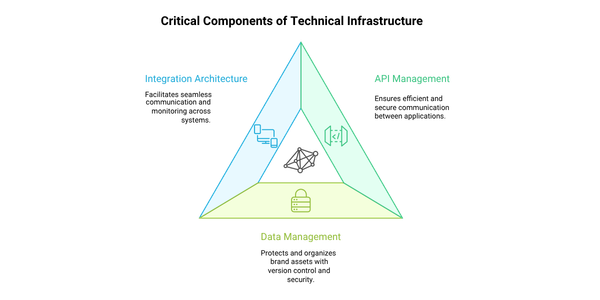
Digital Ecosystems: Building connected networks with suppliers, manufacturers, and logistics providers that share data and coordinate decisions automatically.
Predictive Orchestration: Deploying AI systems that adjust to disruptions before they cascade through the network, reducing impact on operations.
Autonomous Decision-Making: Using Supply Chain AI Integration for real-time responses that don’t require human intervention for routine disruptions.
Data Quality Investment: Establishing foundations for external data acquisition strategies that feed orchestration systems with accurate, timely information.
Multiple companies already use agentic AI for inventory optimization and route planning. These early adopters are seeing improved service levels, reduced expediting costs, and enhanced planner productivity. They’ve shifted from reactive firefighting to proactive management powered by AI Orchestration in Supply Chain systems.
Understanding AI Orchestration: The Technology Behind Supply Chain Resilience
What is supply chain orchestration exactly?
Supply chain orchestration coordinates multiple systems, stakeholders, and workflows to function as a single unified network. Unlike basic integration that connects systems for data flow, orchestration coordinates actions based on that data.
When a shipment delay occurs, an orchestrated supply chain automatically alerts stakeholders, reroutes inventory, adjusts delivery commitments, and triggers supplier interventions. The shift moves from insight to action.
AI agents vs. AI orchestration: critical distinctions
AI agents are specialized software that autonomously achieve specific goals through reasoning and execution. Each agent handles one function, such as billing inquiries or inventory checks.
AI orchestration on the other hand, coordinates data, systems and apps within a unified system. AI Orchestration ensures operations and tasks are in-sync across the organization ensuring efficiency and seamless data exchange.
Key differences:
- Agents: Perform specific tasks autonomously
- Orchestration: Unifies apps & data, manages workflows, permissions, and agent routing across the system
How predictive orchestration works in practice
Predictive orchestration replaces static planning with continuous adaptation. Organizations using AI-driven demand sensing reduce forecast errors by up to 50% and cut lost sales from stockouts by up to 65%.
The process follows a Sense-to-Learn loop. AI ingests external signals like weather patterns and port congestion. Machine learning models predict likely disruptions. The system prescribes specific solutions such as rerouting shipments. Planners execute decisions while the model retrains on outcomes.
The role of real-time data in orchestration success
Organizations lacking real-time data integration face fragmented decision-making. Real-time data enables orchestration to function. Without current information on shipments, inventory levels, and demand fluctuations, systems can’t coordinate effectively.
Technologies like IoT sensors and advanced analytics provide instant visibility across the supply chain. This allows businesses to make adjustments immediately rather than reacting after problems escalate. AI-driven route optimization alone reduces fuel consumption.
The Financial Reality of Supply Chain Orchestration
Supply Chain Disruptions Cost More Than Expected
Disruptions drain profits faster than most executives realize. Companies lose annual revenues to supply chain disruptions.
The impact extends beyond immediate costs. Studies tracking affected firms found disruptions reduce revenue and operating income while increasing total inventory and costs. Firms don’t fully recover even two years after the disruption.
AI Orchestration Eliminates Operational Bottlenecks
AI Orchestration in Supply Chain attacks inefficiencies at their source. Organizations implementing native orchestration platforms achieve cost reductions and improvements in delivery reliability.
Bottlenecks disappear when systems coordinate automatically. Orchestration eliminates manual handoffs, reduces approval delays, and accelerates decision cycles by half.
Key performance improvements include:
- Cost reduction: across operational expenses
- Delivery reliability: improvement in on-time performance
- Decision speed: faster cycle times
- Inventory optimization: reduction in excess stock
Early Adoption Creates Competitive Moats
Early movers create structural advantages competitors can’t match. Companies implementing AI orchestration establish cost structures and service capabilities that build 5-7 year competitive moats.
Gartner research confirms organizations adopting AI-first strategies will achieve better business outcomes than competitors by 2028. Delivery reliability improvements create customer retention advantages worth 8-12% revenue premium in markets where switching costs are high.
The Cost of Waiting Compounds Daily
Delay carries compounding costs. Organizations postponing implementation beyond 2025 face increasingly difficult competitive positions as early adopters establish operational advantages. The window for first-mover advantage narrows as these technologies become mainstream.
The strategic choice isn’t whether to adopt Predictive Orchestration but how quickly you implement it.
Building Your AI Orchestration Strategy
Assessing Your Current Supply Chain Maturity Level
- Start with an honest inventory of where you stand.
- Evaluate capabilities across people, process, performance, and practices.
- Identify capability gaps and disconnects in end-to-end processes before you invest in orchestration.
Most organizations discover they operate at basic integration levels when they need orchestrated ecosystems. This gap analysis reveals which systems require immediate attention and which processes can support AI-driven coordination.
Integration Requirements and Data Quality Foundations
Data quality determines orchestration success. Harmonized data foundations unify operational, financial, and third-party data into a single trusted environment. Without standardized, consistent data across systems, orchestration becomes impossible.
Key data requirements include:
- Standardized formats across all supply chain systems
- Real-time data feeds from suppliers, logistics partners, and internal operations
- External data integration for demand signals, weather patterns, and market conditions
- Data validation processes to ensure accuracy and completeness
Organizations lacking these foundations face fragmented decision-making that undermines orchestration benefits.
Pilot Programs That Deliver Quick Wins
Choose high-frequency, painful workflows first. Focus on processes your team complains about regularly. Pilots typically target transportation or supplier management, demonstrating value quickly before scaling. Organizations see 80-95% time reductions in reporting processes.
Successful pilots share common characteristics. They address clear pain points, involve willing stakeholders, and produce measurable outcomes within 90 days. Transportation routing and inventory optimization often provide the clearest demonstrations of orchestration value.
Scaling From Proof of Concept to Full Deployment
Scaling requires moving from sandbox environments to production-grade platforms. First-year deployment costs reach 10-20x pilot investment. Progress through stabilization, optimization, and full orchestration phases.
The scaling challenge involves more than technology. Successful deployments require change management programs, training initiatives, and governance frameworks. Organizations must prepare for increased complexity as orchestration extends across partner networks.
Measuring ROI and Setting Realistic Expectations
ROI measurement should include:
- Operational improvements: Reduced cycle times, lower inventory levels, improved forecast accuracy
- Financial benefits: Cost savings, revenue protection, margin enhancement
- Strategic advantages: Improved customer satisfaction, competitive positioning, risk reduction
Set expectations based on deployment phases. Pilot projects typically show tactical improvements, while full orchestration delivers strategic competitive advantages over 12-24 month periods.
Stay ahead of the curve with AI Orchestration
AI orchestration represents more than a supply chain trend. It determines which companies adapt to disruptions and which collapse under them. Orchestration creates competitive advantages through predictive capabilities, real-time coordination, and autonomous decision-making that manual processes cannot match.
The window for early adoption continues narrowing. Organizations implementing orchestration strategies now build cost structures and service capabilities competitors cannot replicate for years. The question isn’t whether your supply chain needs orchestration. It is if you can afford to wait while competitors establish operational advantages.
This is where Aekyam makes a difference.
Aekyam simplifies AI orchestration by bringing together data, systems, and workflows into a unified, intelligent layer. Instead of siloed operations, it enables seamless coordination across your supply chain.
With Aekyam processes are no longer fragmented and working in silos, but they turn into a synchronized, real-time ecosystem.
With Aekyam, you can:
- Automate decision-making with AI agents that act in real time
- Gain predictive visibility across operations
- Reduce manual intervention and operational delays
- Scale faster without increasing complexity
It’s not just about adopting AI Orchestration for your supply chain operations, it’s about making it work together, intelligently and efficiently.
Start with your maturity assessment. Get in touch with us to take the next step.
Share
Read Similar Blogs